EN

Hearing Aid Fitting Software: PC-Based vs. App-Based Solutions
2026/11/11
Explore hearing aid fitting software. Compare PC fitting with app-based options, compatibility, professional workflows, plus distributor needs.
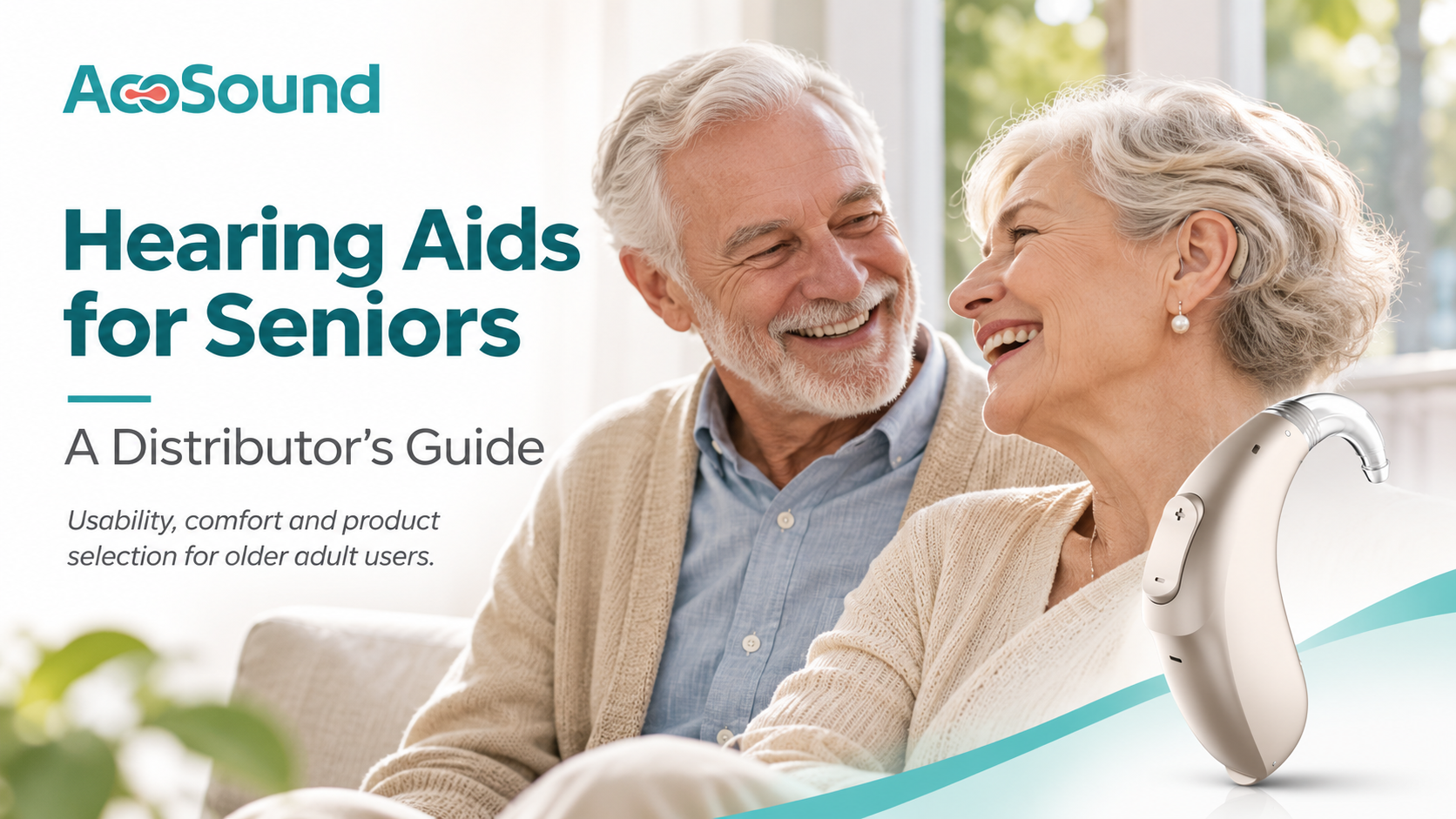
The market for hearing aids for seniors is not built around one standard user. Users differ in hearing needs, dexterity, vision, lifestyle, technology preferences and access to follow-up care. For distributors, the challenge is not simply to find a device labelled for seniors. It is to build a product range that gives different users an appropriate balance of wearing comfort, handling, sound performance, power options and ongoing support.
A useful product strategy starts with the user experience, not an age-based assumption. When evaluating hearing aids for seniors, buyers should consider the situations in which customers want support, how they manage small controls, and whether they prefer physical buttons, smartphone apps or assistance from a family member.
Age can be a useful market segment, but it should not be treated as a fitting specification. Two customers of the same age may have different hearing profiles, ear anatomy, communication priorities and ability to manage small devices. A product strategy for hearing aids for seniors should therefore be based on individual needs, not a single age-based promise.
Begin by considering the situations in which customers want support: one-to-one conversations, family gatherings, television, phone calls, community activities or work. Also consider how comfortable they are with small controls, smartphone apps, charging routines and regular cleaning.
Avoid suggesting that one style or feature is suitable for every older adult. Hearing aid selection should be based on an individual hearing assessment, professional recommendations where required, and the user's preferences.
Behind-the-ear (BTE) and receiver-in-canal (RIC) designs are two important categories to consider when planning a senior-focused product range. Buyers comparing BTE hearing aids with RIC hearing aids should look beyond appearance and assess handling, maintenance and fitting requirements. Both styles may have a place in a portfolio of hearing aids for seniors, depending on the users being served.
A traditional BTE hearing aid places its main housing behind the ear and connects to an earmold or other coupling through tubing. Depending on the model, this may make handling and routine cleaning more straightforward for some users.
RIC devices also sit behind the ear, but the receiver is positioned in the ear canal and connected by a thin wire. This can create a smaller behind-the-ear housing and a less visible profile. However, the receiver, wire and earpiece may involve smaller parts that users need to insert, remove and maintain.
Neither BTE nor RIC is automatically the better choice for older adults. The right option depends on hearing requirements, ear anatomy, comfort, handling ability, cosmetic preference and the fitting professional's recommendation. Distributors who offer more than one form factor can address a broader range of customer needs.
A device can have an extensive feature list and still be difficult for a customer to use every day. During product evaluation, pay attention to the small interactions that shape the user experience. This matters when selecting hearing aids for seniors, whose handling preferences and support needs vary.
Check whether the controls are easy to locate and distinguish. Buttons should provide clear feedback, and users should be able to understand basic actions such as changing volume, switching programs, powering the device on or off, and checking status. If the device relies on an app for certain adjustments, review the app's text size, navigation, labels and number of steps.
Do not assume that every older customer wants smartphone-based control. Some may prefer physical buttons; others may welcome app access or help from a family member.
Demonstrations should cover insertion, removal, left-right identification, controls and storage.
Battery management is another important consideration. Rechargeable models can reduce the need to handle small disposable batteries, which may be helpful for users who find battery replacement difficult. However, they introduce a charging routine users must maintain.
When comparing rechargeable products, check how the devices sit in the charger, whether indicators are easy to read and how charging errors are handled. Verify charging and operating-time claims for the exact model before using them in sales materials. For hearing aids for seniors, the charging process should be demonstrated as part of the product evaluation rather than treated as a minor accessory detail.
Disposable-battery models may suit customers who prefer to replace batteries or do not want to rely on a charging dock. In that case, evaluate battery-door handling, battery availability in the target market and the clarity of low-battery warnings.
The key is to offer a power option that fits the user's habits and the distributor's after-sales support capability—not to assume that rechargeable is always the best solution.
Comfort is not determined by product size alone. Ear anatomy, dome or earmold selection, retention, device weight and wearing habits all affect how a hearing aid feels during daily use.
Evaluate maintenance alongside comfort. Check how users access wax guards, domes, tubing and other replaceable parts, and whether cleaning steps are easy to demonstrate. For RIC models, explain that the receiver and earpiece need appropriate care. For BTE models, clarify the care required for the tubing, earmold and housing.
A distributor should also confirm the availability of replacement parts, user instructions and service support. These details matter when building a dependable selection of hearing aids for seniors.
Some older adults use smartphones and wireless accessories regularly; others prefer a simpler setup. If a model includes an app or wireless connection, distinguish remote control from direct audio streaming. They are different functions and should be verified separately.
Check compatible phone models, OS versions, connection methods and pairing or reconnection steps. If caregivers may help with setup, instructions should explain their role.
For distributors positioning hearing aids for seniors, transparent connectivity information helps avoid mismatched expectations and reduces preventable support questions after sale.
A senior-focused assortment should be built around user needs rather than a single age-based label. Include more than one form factor where each has a clear user profile and support plan. Consider whether the range includes suitable BTE and RIC options, different control layouts, clearly explained power choices and the accessories or replacement parts needed for ongoing care.
Before placing an order, ask a hearing aid supplier for model-specific documentation covering intended use, available features, fitting or adjustment requirements, compatible accessories, care instructions and warranty terms. For buyers sourcing hearing aids for seniors, this documentation is part of the product evaluation, not an optional extra.
Training is part of the product offer. Retail teams should be able to demonstrate insertion, removal, power management, cleaning and basic troubleshooting—and know when to refer a customer to a qualified hearing-care professional.
Before selecting a model, confirm:
Which user needs and listening situations is the model intended to address?
Are the controls, insertion and removal steps manageable for the intended users?
Does the power option fit the customer's routine?
What cleaning, consumables and replacement parts are required?
Are app control and audio streaming clearly distinguished and verified?
Can the supplier provide current documentation, training materials and after-sales support?
If an answer is unclear, keep it open in the evaluation. Do not turn an unverified function into a sales claim.
A successful senior-focused hearing aid range is not defined by age-specific marketing alone. It is built by matching product design, handling, comfort, power options and service support to the needs of different users. Evaluating the complete ownership experience helps distributors build trust with retailers and customers.
A hearing aid distributor needs product information and support that can be passed on clearly to retail partners. AcoSound works with distributors, brands and hearing-care partners on hearing aid product development and OEM/ODM cooperation. If you are planning a range of hearing aids for seniors, share your target market, preferred product styles and required features with the AcoSound team. This creates a practical starting point for discussing relevant models, documentation and cooperation requirements.
2026/11/11
Explore hearing aid fitting software. Compare PC fitting with app-based options, compatibility, professional workflows, plus distributor needs.
2026/11/09
Discover how hearing aid feedback cancellation works and what distributors should evaluate when comparing adaptive feedback management technologies.

2026/11/06
Explore hearing aid technology, remote fitting, AI-assisted interaction and AcoLink connectivity for hearing care professionals and global distributors.
2026/11/02
A practical guide to Bluetooth hearing aid functions, app control, audio streaming, phone compatibility and supplier checks for distributors.