EN

RIC vs BTE Hearing Aids: A B2B Buying Guide
2026/10/21
Compare RIC vs BTE hearing aids for B2B procurement. Review design, maintenance, product positioning, and supplier factors for distributors.
2026/10/14
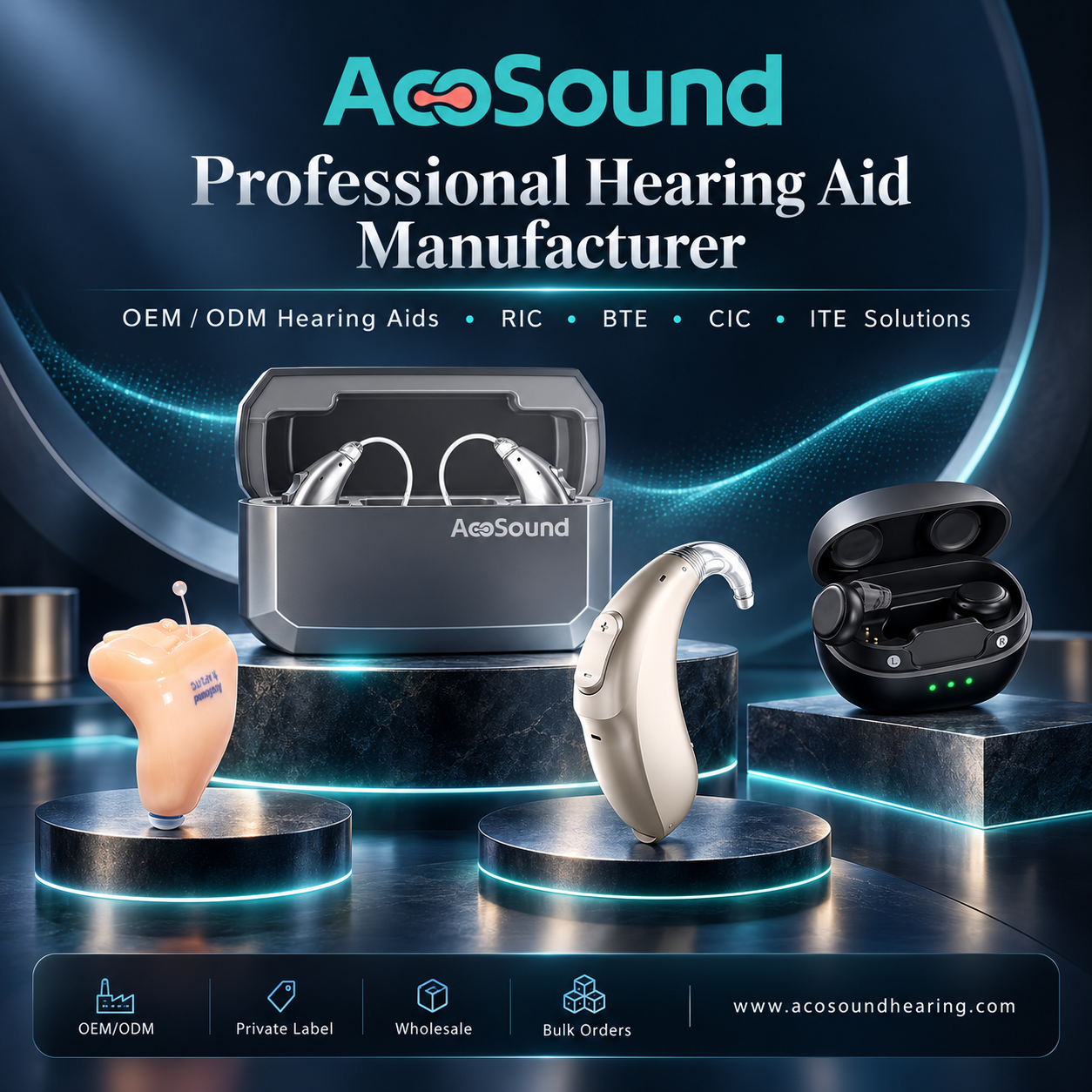
Buying wholesale hearing aids is not simply a matter of finding the lowest unit price. For distributors, importers, hearing clinics, and private-label brands, the right purchasing decision must balance device performance, fitting options, documentation, supply consistency, and after-sales support.
This guide explains how to compare hearing aid types, evaluate a manufacturer, and prepare for a bulk order. It also outlines the questions to ask before starting an OEM or ODM project.
Wholesale hearing aids are purchased by businesses that resell devices or deliver hearing-care services. However, different buyers have different priorities.
Distributors and wholesalers need a reliable product range, predictable availability, and competitive total costs.
Hearing clinics need suitable fitting options, clear technical documentation, and support for professional services.
Importers must understand local regulatory obligations, labeling, and shipping documentation.
Private-label brands may require custom packaging, branding, and selected device configurations.
Before contacting suppliers, define your target market, preferred hearing aid styles, intended sales channels, and estimated order quantity. A clear brief makes product comparisons more meaningful.
The best wholesale hearing aids depend on your customers and the services available in your market. Start by comparing three common styles.
RIC hearing aids position the receiver in the ear canal while the main body sits behind the ear. Depending on the model, features may include rechargeable batteries, multiple fitting channels, noise reduction, directional microphones, and app-based functions.
RIC devices can be relevant for clinics and distributors seeking compact designs with professional fitting options. Explore AcoSound RIC hearing aids.
BTE hearing aids place their electronics behind the ear and deliver sound through a tube or acoustic coupling. Different models offer different amplification levels, power options, and fitting ranges.
For procurement, compare output, gain, feedback cancellation, battery system, earmold compatibility, and service requirements. Browse AcoSound BTE hearing aids.
In-the-ear (ITE) and completely-in-canal (CIC) products may suit customers who prefer smaller, discreet devices. Buyers should still verify the actual fitting range, power, battery life, physical dimensions, and maintenance needs.
No single style is best for every market. A focused, well-supported selection often serves distributors better than a large catalog of poorly differentiated products.
When comparing wholesale hearing aids, ask for model-specific specifications rather than relying on broad claims such as "smart" or "advanced."
Fitting Channels and Adjustable Bands
More adjustment options may allow finer frequency-specific settings, but channel count alone does not guarantee better sound quality. DSP channels, fitting channels, and adjustable frequency bands should not be confused.
Noise and Feedback Management
Review the type of noise reduction, feedback cancellation, microphone configuration, and available listening programs. Ask how any advertised performance figures were measured.
Connectivity
App control, Bluetooth audio streaming, hands-free calling, and remote fitting are different capabilities. One does not imply the others. Check the exact hearing aid model, software, phone compatibility, and supported regions.
Power and Accessories
Verify rechargeable or disposable battery options, charger design, accessories, spare parts, and the expected maintenance workflow.
A comparison sheet with consistent technical fields helps buyers assess competing offers fairly.
A dependable supplier should support both your initial purchase and future operations. Before purchasing wholesale hearing aids, review these areas:
Quality Management: Request information about inspection procedures, product traceability, complaint handling, and relevant quality-system documents.
Engineering Support: Ask whether technical staff can explain product specifications, fitting software, compatibility, and configuration differences.
Production Consistency: Discuss lead times, available capacity, component substitutions, and how the supplier manages changes between batches.
After-Sales Service: Clarify warranty conditions, repair procedures, spare parts, training, and technical response arrangements.
Commercial Transparency: Confirm exactly what is included in the quoted price, from accessories to packaging and shipping terms.
Do not assume that a certificate held by a manufacturer authorizes every product for sale in every country. Verify model-specific documents and your market's requirements separately.
Samples provide an opportunity to verify a proposed configuration before committing to wholesale hearing aids in volume.
First, inspect housing quality, controls, charging contacts, receiver connections, and included accessories. Next, compare the sample with its specification sheet and verify the model and software version.
Where qualified personnel and equipment are available, conduct appropriate electroacoustic tests for output, gain, distortion, and frequency response. Test fitting tools and supported connectivity functions separately.
Record the results in an acceptance checklist. Agree with the supplier on approved samples, labeling, accessories, packaging, and inspection criteria before confirming production.
The price of wholesale hearing aids can vary with processing features, microphone systems, wireless functions, order volume, packaging, and customization.
A useful quotation request should specify:
Target models and technical requirements
Estimated quantity and expected reorder frequency
Standard products or OEM/ODM customization
Accessories, packaging, and labeling requirements
Destination market and delivery terms
Sample availability, MOQ, and lead-time expectations
Warranty and after-sales arrangements
Compare the total landed cost, not only the unit price. Freight, duties, defective-unit handling, and delivery delays can affect profitability.
Minimum order quantity (MOQ) and production schedules may differ between standard and customized orders. Ask for written terms rather than assuming one fixed quantity or delivery time applies to all products.
Private-label hearing aids can help distributors and brand owners establish a distinct market identity. Depending on the product platform, available options may include logos, packaging, user manuals, accessories, and selected device configurations.
OEM and ODM projects can involve different levels of engineering work. Discuss the proposed changes, sample approval process, intellectual property terms, tooling costs, MOQ, and timeline before starting.
AcoSound provides an OEM/ODM cooperation page covering product and branding customization. Any requested feature or design change should be confirmed for the specific project.
Hearing aid rules differ by destination market and device classification. Before importing wholesale hearing aids, establish who is responsible for product registration or authorization, import documentation, labeling, and post-market obligations.
Ask for the applicable technical and regulatory documents for the exact model. ISO 13485 certification, FDA establishment registration, product listing, clearance, and approval are not interchangeable. Buyers should verify the documentation required in their jurisdiction.
Ask the supplier about sample availability, charges, specifications, and delivery terms. Evaluate samples against agreed criteria before confirming a larger order.
MOQ depends on the manufacturer, model, inventory, and customization. Request model-specific minimum quantities for standard and private-label orders.
No. Bluetooth connection, app control, audio streaming, and calling are separate capabilities. Confirm support for the exact model and compatible smartphone.
Some manufacturers offer OEM/ODM and private-label arrangements. Available customization, labeling, legal responsibilities, and minimum quantities must be agreed before production.
Choosing wholesale hearing aids is easier when product requirements, sample standards, commercial terms, and support arrangements are clear from the start. AcoSound works with B2B buyers exploring hearing aid sourcing and OEM/ODM cooperation.
Review our hearing aid product range or contact AcoSound to discuss suitable models, samples, and wholesale purchasing requirements.
2026/10/21
Compare RIC vs BTE hearing aids for B2B procurement. Review design, maintenance, product positioning, and supplier factors for distributors.
2026/10/16
Learn how to compare 8, 12, 16, 24 and 32-channel hearing aid platforms for distributors, importers, OEM/ODM and private-label projects.
2025/03/10
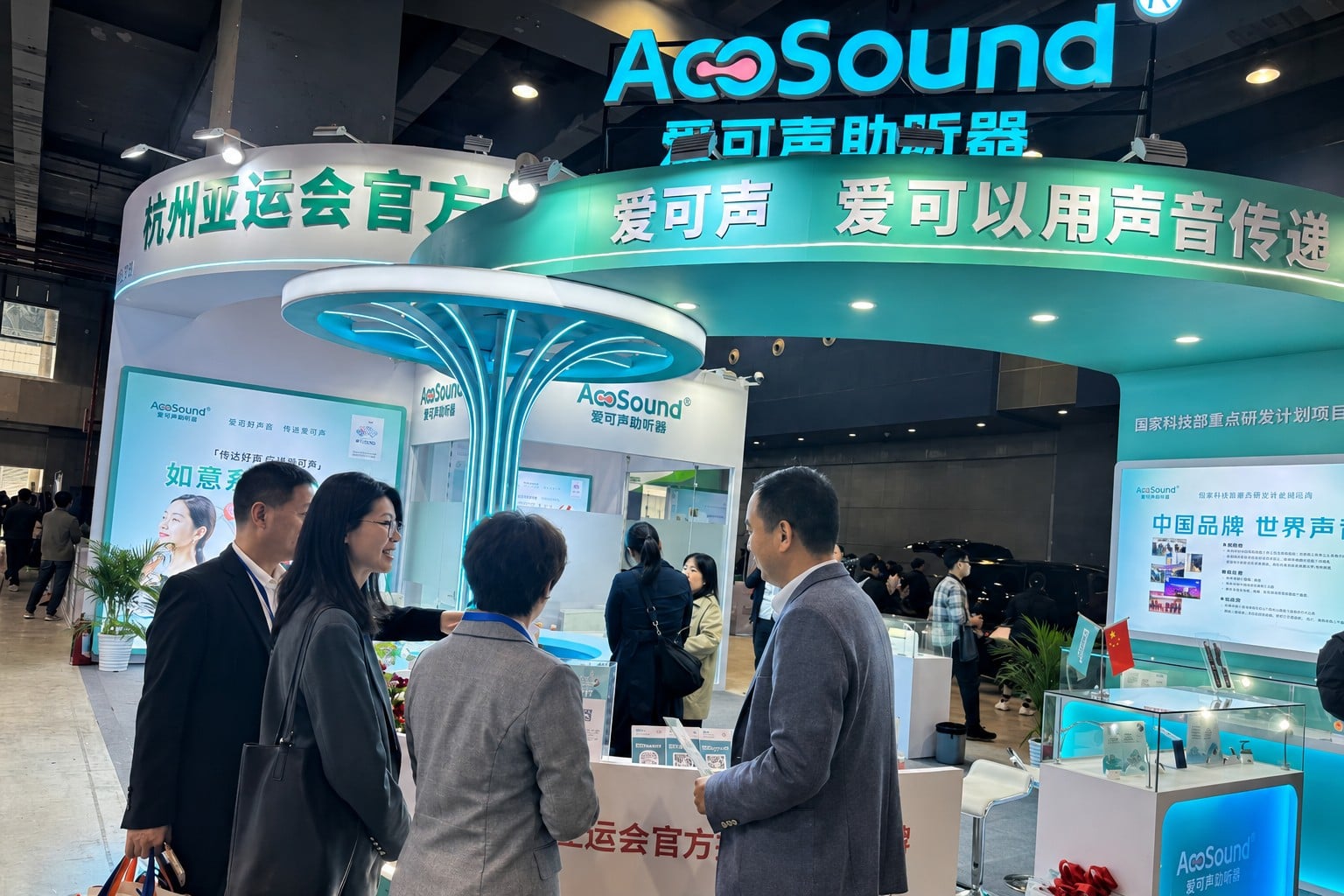
AcoSound, a smart hearing aid manufacturer, showcased rechargeable hearing aids, Bluetooth technology and intelligent fitting solutions at Guangzhou Expo 2025.

2025/05/27
AcoSound advances China-UAE hearing technology cooperation through joint R&D, local production and long-term assistive technology partnership in the UAE.