EN

RIC vs BTE Hearing Aids: A B2B Buying Guide
2026/10/21
Compare RIC vs BTE hearing aids for B2B procurement. Review design, maintenance, product positioning, and supplier factors for distributors.
2026/10/16
When sourcing digital hearing aids, distributors, importers, hearing care businesses, and private-label brands often compare products by channel count. Supplier catalogs may list 8-channel, 12-channel, 16-channel, 24-channel, and 32-channel configurations.
But does a higher channel count automatically mean a better hearing aid? Not necessarily.
For B2B buyers, hearing aid channels are one part of a product's fitting and digital signal-processing architecture. A professional evaluation should also consider adjustable bands, DSP architecture, compression, feedback cancellation, noise management, environment recognition, fitting software, acoustic specifications, product configuration, and manufacturing capability.
This guide explains how to compare 8–32-channel platforms for distribution, OEM, ODM, and private-label projects.
Hearing aid channels are part of a digital hearing aid's fitting and signal-processing architecture. They allow different frequency regions to be processed and adjusted within the fitting system, depending on the product design.
For B2B buyers, channel count should be treated as a technical specification rather than a simple ranking of overall product quality. A higher number of channels may provide greater frequency-specific fitting capacity, but it does not automatically make one product better for every market or application.
When comparing digital hearing aids, buyers should also review adjustable bands, DSP channels, compression technology, feedback cancellation, noise management, environment recognition, directional processing, fitting software, connectivity, and electroacoustic specifications.
Channel configuration can help distributors create a clear product hierarchy:
These are general commercial positioning references, not universal clinical classifications.
The right configuration depends on the target market, price segment, product category, fitting requirements, regulatory environment, and complete technical architecture.
An 8-channel platform can provide a practical balance between fitting capacity and commercial positioning. For distributors targeting mainstream or price-sensitive markets, it can serve as an entry or core product.
When evaluating hearing aid channels at this level, buyers should compare:
The key question is not simply whether a supplier offers eight channels, but how the complete platform is designed and what functions are included.
A 12-channel platform can provide greater fitting capacity and support a broader mid-range product strategy.
For distributors, this segment can be useful when the market expects more fitting flexibility than an entry-level product. However, two 12-channel products may have different processing technologies and feature sets.
Buyers should compare feedback cancellation, noise management, environment recognition, compression, software, connectivity, and acoustic specifications together with channel count.
This provides a more reliable basis for product selection and portfolio planning.
A 16-channel platform can occupy a strong mid-range or advanced position. It can give distributors a step-up product without requiring the entire portfolio to use the highest channel configuration.
When comparing 16-channel products, review:
Channel count should always be evaluated together with the rest of the product architecture.
A 24-channel platform provides a higher fitting-channel configuration and can support advanced product positioning.
For B2B buyers, it may serve as a higher-tier option when combined with advanced processing and environmental-management functions.
However, buyers should evaluate the complete technical specification rather than assuming that channel number alone determines performance.
A complete evaluation should include processing architecture, acoustic specifications, fitting capabilities, and the intended application.
A 32-channel platform represents a high-capacity configuration and can support premium positioning.
For distributors, it can be a useful top-tier option within a structured portfolio. However, 32 channels should not be presented as an automatic guarantee of better sound quality.
Overall processing architecture, electroacoustic performance, fitting software, product design, and intended application remain important.
For this reason, professional buyers should compare the complete platform rather than simply selecting the highest channel count.
This distinction is important when comparing digital hearing aids from different suppliers.
Fitting channels describe part of the fitting and processing architecture and are relevant to frequency-specific adjustment.
Adjustable bands describe frequency-specific adjustment points within the fitting system. A product can have more adjustable bands than fitting channels.
DSP channels describe part of the digital signal-processing architecture.
These specifications are related, but they are not interchangeable.
For example, a product may be specified as:
12 fitting channels + 24 adjustable bands + 48 DSP channels
These figures describe different technical aspects of the platform.
A professional supplier should clearly define each term and explain how the specifications are measured.
A professional procurement process should cover more than hearing aid channels.
Review:
Consider:
Evaluate:
Review specifications such as:
These specifications provide additional information when comparing products beyond channel count.
A reliable hearing aid manufacturer should be evaluated on:
For brands developing private label hearing aids, customization can be as important as the underlying technology.
A hearing aid OEM partner may need to support:
A distributor does not necessarily need one "best" product. A tiered portfolio can be more practical:
Entry / Core: 8 channels
Mid-Range: 12–16 channels
Advanced: 24 channels
Premium / High-Capacity: 32 channels
This structure gives sales teams a clearer way to communicate product differences and helps distributors serve different market segments.
The exact positioning should be based on technical specifications, target price, customer requirements, regulatory needs, and the competitive environment.
When choosing a hearing aid manufacturer, B2B buyers should evaluate both the product platform and the supplier's ability to execute the project.
Look at:
A suitable supplier should be able to support the product beyond the initial sample stage.
For distributors and importers, stable manufacturing and technical support can be just as important as the initial product specification.
For brands developing private label hearing aids, the technical platform should be selected together with the intended market position.
A practical strategy may use:
8 channels for entry products
12–16 channels for core products
24 channels for advanced products
32 channels for premium positioning
Before mass production, buyers should evaluate samples and confirm:
This approach helps reduce procurement risk and creates a clearer path from product selection to commercial launch.
AcoSound provides hearing aid solutions for distributors, importers, hearing care businesses, retailers, and private-label brands.
Its portfolio covers multiple product categories and channel configurations, allowing B2B buyers to select platforms according to target price, technical requirements, product positioning, and market needs.
For private-label projects, the supplier relationship can also cover product customization, branding, packaging, accessories, and other agreed OEM/ODM requirements.
This allows distributors and brands to develop a product portfolio based on their specific market strategy rather than relying on a single hearing aid configuration.
Hearing aid channels are an important specification when comparing digital hearing aid platforms, but they should not be the only measure of product quality.
For B2B procurement, compare:
Channels + Bands + DSP + Compression + Feedback Cancellation + Noise Management + Environment Recognition + Fitting Software + Product Configuration + OEM/ODM Capability
An 8-channel platform can support an entry or core strategy.
12- and 16-channel platforms can provide broader mid-range positioning.
24- and 32-channel platforms can support advanced and premium product portfolios.
The best platform is not simply the one with the highest channel count.
It is the platform that matches your target market, price segment, technical requirements, product strategy, and long-term business objectives.
If you are looking for a hearing aid manufacturer for wholesale, OEM, ODM, or private-label projects, AcoSound can help you evaluate suitable platforms and customization options for your market.
2026/10/21
Compare RIC vs BTE hearing aids for B2B procurement. Review design, maintenance, product positioning, and supplier factors for distributors.

2026/10/14
Learn how to source wholesale hearing aids, compare RIC and BTE models, evaluate suppliers, and plan OEM/ODM orders with AcoSound.
2025/03/10
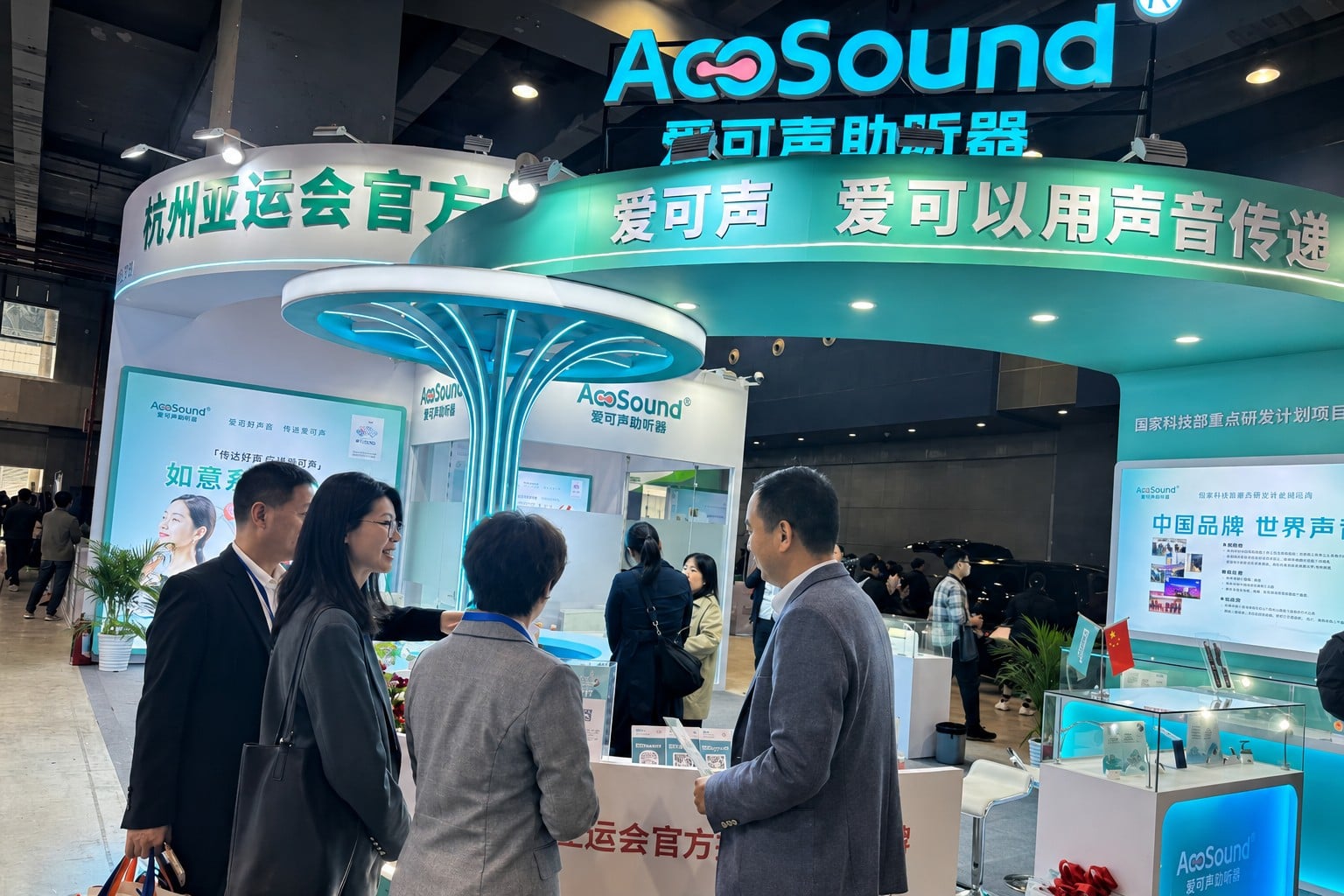
AcoSound, a smart hearing aid manufacturer, showcased rechargeable hearing aids, Bluetooth technology and intelligent fitting solutions at Guangzhou Expo 2025.

2025/05/27
AcoSound advances China-UAE hearing technology cooperation through joint R&D, local production and long-term assistive technology partnership in the UAE.